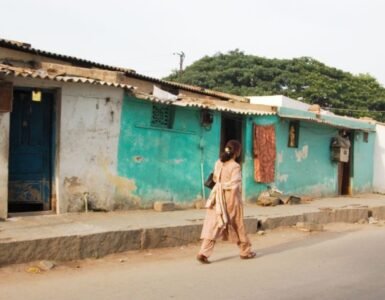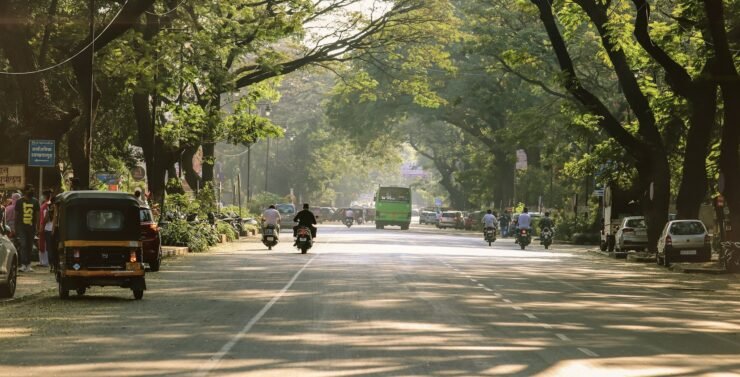
The condition of a society is visible long before we read its economic statistics or listen to its political speeches. It is visible on the roadside, in public parks, around markets, beside railway lines, and along rivers. Rubbish scattered across common spaces, overflowing drains, damaged footpaths, stained walls, and polluted water tell us something important about what a society accepts, ignores, and considers someone else’s responsibility.
Clean public spaces do not merely reflect municipal efficiency. They reflect public values. They show whether people respect shared property, whether authorities perform basic duties, whether rules are enforced, and whether citizens believe the space beyond their front door also belongs to them.
The Problem Is Outside, but It Begins Within
It is easy to blame the government when rubbish remains uncollected or a river becomes polluted. Government agencies must certainly be held accountable. They are responsible for regular collection, safe disposal, drainage, sanitation infrastructure, enforcement, and environmental protection. A citizen who pays taxes has every right to expect these systems to work.
Yet public failure is not created by government alone.
Someone throws the packet from a car. Someone leaves household waste beside the road. Someone dumps construction debris into an empty plot. A business releases waste into a drain. A religious or social gathering leaves plastic and food behind. A household connects sewage illegally because it is convenient. The government may fail to prevent or remove the waste, but citizens often create it first.
As the saying suggests, the problem is within. We cannot keep our homes spotless while treating the street, river, park, or vacant land as a place where responsibility ends.
Private Cleanliness Is Not Public Cleanliness
Many societies value cleanliness inside the home but show less concern for common areas. Floors are swept carefully, rubbish is collected, and entrances are washed, yet the waste may simply be pushed beyond the boundary wall. This is not cleanliness. It is relocation.
A society becomes cleaner when people recognise that a road is an extension of the neighbourhood, a river is part of the public water system, and a park belongs to everyone. Shared ownership should create greater responsibility, not less. Public property is not property that belongs to nobody. It belongs to all of us.
Rivers Record Our Choices
Few public spaces reveal collective values more clearly than rivers. A river can be worshipped, photographed, celebrated in poetry, and still be treated as a drain. Sewage, industrial discharge, plastic, religious offerings, and household waste may enter the same water that communities depend upon downstream.
Cleaning a river requires treatment plants, sewer networks, scientific monitoring, industrial enforcement, and long term investment. But it also requires behavioural change. No river can remain clean if millions of people and thousands of organisations continue to place untreated waste into it. Respect must be visible in conduct, not only in ceremony or language.
We Are the Government
Government is not a separate species. It is made up of people from society. The sanitation worker, municipal engineer, contractor, clerk, councillor, regulator, minister, and citizen all emerge from the same culture. If carelessness, rule breaking, and indifference are normal in society, those habits do not disappear when someone enters public office.
Accountability must operate in both directions. Governments must provide bins, collection systems, public toilets, sewage treatment, recycling facilities, and responsive complaint channels. Citizens must use those systems, follow the rules, report failures, and stop creating the very conditions they condemn.
Behaviour Changes When Systems Work
Personal responsibility is important, but lectures alone will not clean a city. People are more likely to dispose of waste correctly when bins are available, collection is reliable, streets are designed well, and rules are enforced fairly. A household cannot follow a segregation policy if all waste is mixed together after collection. A shopkeeper cannot maintain a clean frontage if the market has no disposal point. A neighbourhood cannot protect a lake if untreated sewage flows into it through a public drain.
Good systems make good behaviour easier. Clear responsibility, predictable service, visible enforcement, public information, and practical infrastructure can turn civic duty into a daily habit. Government should not merely ask people to care. It should create conditions in which responsible action is possible and irresponsible action has consequences.
Small Acts Create a Civic Culture
National improvement begins with ordinary behaviour repeated by millions of people. Carrying waste until a bin is available, reducing disposable plastic, separating household rubbish, questioning illegal dumping, reporting broken collection points, joining a local clean up, and teaching children not to litter may seem small. Together, these actions establish a social standard.
The most powerful change occurs when littering becomes embarrassing rather than normal, when dumping waste attracts immediate objection, and when public cleanliness is treated as a basic expectation instead of a special campaign. Culture is formed by what people tolerate as much as by what they praise.
Demand Better, and Behave Better
Citizens should know which authority manages waste collection, roads, drains, parks, and waterways. Complaints should include exact locations, photographs, dates, and reference numbers. Repeated failure should be escalated to elected representatives, regulators, environmental bodies, or courts where appropriate. Civic responsibility is not silent obedience. It includes persistent and informed demands for competent government.
But those demands carry greater moral force when citizens also follow the rules themselves. It is difficult to demand spotless streets while throwing waste from a vehicle. It is inconsistent to criticise polluted rivers while ignoring illegal sewage or dumping. We should expect better from government, businesses, communities, and ourselves at the same time.
A Nation Improves When Its Habits Improve
Public spaces are a collective mirror. They reveal whether we value dignity, health, equality, nature, and responsibility. Wealth can build beautiful private homes and impressive commercial districts, but only a civic culture can keep common spaces clean and respected.
When people improve, the nation improves because the nation is its people. When institutions improve, citizens gain the support needed to maintain better habits. Neither side can succeed alone. The government must act, and the public must act, because they are not separate worlds.
A clean road, a usable park, and a living river are not cosmetic achievements. They are evidence that a society understands the meaning of shared life. If we want to know what a nation truly values, we should not look only at its monuments or speeches. We should look at the spaces everyone uses and ask how everyone treats them.