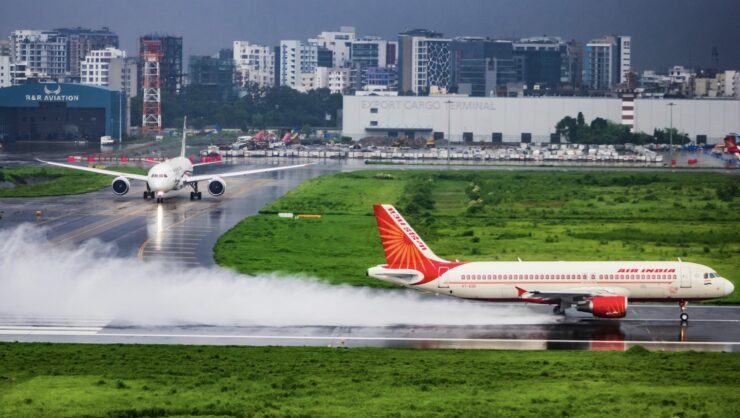
Fifteen years of aviation development have brought larger gateways and wider regional access, with operational airports rising from 74 in 2014 to 166 by October 2026.
NEW DELHI: India’s expanding airport network is becoming a visible expression of a more connected country. Across the past 15 years, aviation development has combined larger urban gateways with improved access for smaller cities and remote regions. The clearest recent government comparison shows operational airports increasing from 74 in 2014 to 166 by October 2026, more than doubling the network in 12 years. [1]
The longer story reaches back to the early 2010s. In its 2011 to 2012 annual report, the Ministry of Civil Aviation set out an ambition to place India among the world’s five largest aviation markets. By 2026, government reports described India as the third largest domestic aviation market. The measures differ, but together they show how aviation has moved from an expanding national ambition to a sector operating at major global scale. [1, 2]

A wider aviation map
The rise from 74 to 166 operational airports represents a net increase of 92, or approximately 124%. This is growth in the operational network, not a claim that every additional airport was built from scratch. The Ministry of Civil Aviation describes a combination of new greenfield airports, upgrades to existing facilities and the development of regional airstrips. Together, these approaches are extending aviation infrastructure beyond its traditional metropolitan centres. [1, 3]
Regional connectivity has been an important part of that expansion. Launched in October 2016, the UDAN scheme completed its first decade with 687 routes operationalised, more than 368,000 flights and 17.2 million passengers carried. Its 95 operationalised aerodromes include 17 heliports and two water aerodromes, illustrating how the programme reaches places where conventional airport development is not the only solution. These are cumulative programme totals. [1]
Smaller cities gain new connections
The significance of this wider network goes beyond terminal buildings and runway counts. The government’s October 2026 review highlights Tezu, Deoghar and Kishangarh as examples of regional aviation supporting tourism, access to medical services, agricultural trade and local employment. For communities previously distant from regular air services, a nearby connection can open a faster route to markets, visitors and essential services. [1]
The broader economic contribution is substantial. A June 2025 report from the International Air Transport Association estimated that aviation and the tourism it supports contributed US$53.6 billion to India’s economy and supported 7.7 million jobs in 2023. Those figures cover the wider aviation ecosystem, rather than airport construction alone, but they underline why improved connectivity matters to business, employment and investment. [4]
New gateways create room to grow
At the metropolitan level, Navi Mumbai International Airport’s inauguration on 8 October 2025 marked the arrival of a second major international gateway for the Mumbai region. Noida International Airport offers another example of the capacity being developed around major population centres. Its first phase is designed to handle 12 million passengers annually, with capacity planned to reach 70 million upon full development. [3, 5]
Noida’s first phase was developed with an investment of around ₹11,200 crore under a public private partnership model. The project also includes a cargo hub designed initially for more than 250,000 metric tonnes annually, with further expansion planned. Its intended integration with road, rail, metro and regional transit links shows how airport development is increasingly being planned alongside the wider transport network. Passenger and cargo capacity figures describe design capability, not actual annual traffic. [6]
The next chapter in a more connected India
The next phase of UDAN, launched in July 2026, carries an outlay of ₹28,840 crore for the period from 2026 to 2027 through 2035 to 2036. It plans to develop 100 airports from existing unserved airstrips and 200 modern helipads, alongside support for regional operations. These remain future commitments, but they extend the direction established over the past 15 years: building capacity in major cities while bringing more regions into the aviation network. India’s airport story is increasingly about both scale and reach, connecting national growth with opportunities closer to home. [1]
Sources
- Press Information Bureau, Wings of Change: 10 Years of Redefining Regional Air Connectivity through UDAN, 20 October 2026. Source for 166 operational airports, regional connectivity totals, local benefits and the next phase of UDAN.
- Ministry of Civil Aviation, Annual Report 2011 to 2012. Historical context for India’s ambition to become one of the world’s five largest aviation markets.
- Ministry of Civil Aviation via Press Information Bureau, Aerodrome License Granted to Noida International Airport, 6 March 2026. Source for airport development approaches and Noida’s phased passenger capacity.
- International Air Transport Association, Aviation in India: Sustaining and Growing a Dynamic Air Transport Market, June 2025. Independent industry analysis of aviation’s economic contribution and employment supported in 2023.
- Press Information Bureau, Navi Mumbai International Airport inauguration, 8 October 2025. Confirms the inauguration of the Mumbai region’s second major international gateway.
- Press Information Bureau, Noida International Airport Phase I project briefing, 26 March 2026. Source for investment, planned transport integration and cargo capacity.